01 / FIRST TONEā
High & level
Keep your pitch steady at a comfortable high level.
māmother
A clearer start to Mandarin
Know the word, but still hesitate to say it? Learn how pitch changes meaning—with explanations made for English speakers.
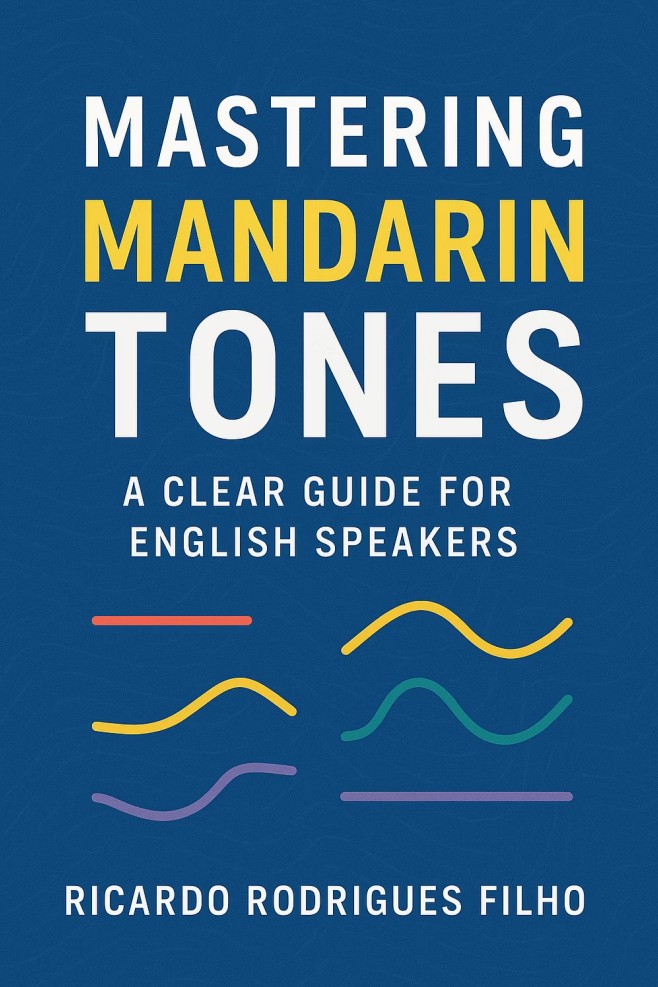
Turn confusing tone marks into a practice you can follow with Mastering Mandarin Tones: A Clear Guide for English Speakers.
61-page PDF ebook • Written in English • Checkout on Hotmart
Sound familiar?
Maybe the second and third tones blur together. Maybe you can say a word on its own, but lose the tone in a sentence. Or perhaps every explanation assumes you already know what to listen for.
Mandarin tones are learnable patterns of relative pitch. You don’t need to hit a particular musical note. You need to understand the movement—and practice it in your own comfortable voice.
Start with the shape of each tone. Then learn what happens when tones meet.
Your first small breakthrough
In Mandarin Chinese, the same syllable can mean different things depending on its tone. Here’s a simple introduction using ma.
Keep your pitch steady at a comfortable high level.
Start around the middle of your range, then move upward.
Dip low. In isolation, the full tone rises again at the end.
Begin high and drop decisively. Keep your voice relaxed.
It’s short and light, with no tone mark. Its pitch depends on the preceding tone—like ma, the question particle.
Try this first
Move your finger along each curve while slowly saying the syllable. Keep your volume comfortable; change the pitch, not the loudness. This visual warm-up is a starting point. Compare your pronunciation with a reliable native-speaker model as you practice.
In everyday speech, the third tone often stays low, and neighboring tones can change how a word sounds. The ebook walks you through these details.
Explore what’s insideBeyond the basics
Move from understanding individual tones to practicing combinations and recognizing changes in connected speech.
Explanations, visual patterns, common words and practice exercises—all in English.
Get my copyWhy tones matter, how they change meaning, and how Mandarin pitch differs from English intonation.
The four main tones and the neutral tone, with pitch guidance, common words, exercises and mistakes to watch for.
An introduction to tone pairs, a tone-pair chart and focused practice with combinations beginning in the first tone.
Full and half third tones, third-tone sequences, and tone sandhi rules for bù and yī.
Made for your learning journey
This ebook is a good fit if you:
A focused pronunciation guide to support your practice. Use it alongside listening and speaking—not as a substitute for them.
A few things you might be wondering
Clear answers, so you can decide whether this guide fits your next step.
Yes. It starts with why Mandarin tones matter and introduces the four main tones and neutral tone before moving into practice, tone pairs and tone changes. It is also useful for learners revisiting the basics.
No. Mandarin tones use relative pitch: the movement of your voice within your own range. The guide helps you understand those movements and practice them deliberately.
The second tone rises from a middle pitch. The third tone is centered on a low pitch; its full, isolated form dips and rises, but in connected speech it often stays low. The ebook explores those differences and common errors.
Yes. It includes third-tone sandhi, sequences of third tones, and tone-change rules for bù and yī, along with other minor tone changes.
It is a 61-page PDF written in English, with written explanations, visual guidance, examples and exercises. The product offered here is an ebook; no separate audio course is advertised.
Choose “Get the ebook” to continue to Hotmart. The current price, available payment methods, purchase terms and delivery information are shown there before you complete your order.
This guide focuses on tones and pronunciation. Fluency also involves vocabulary, grammar, listening and conversation. Progress depends on consistent practice and feedback; the ebook does not promise fluency within a set time.
Less guessing. More understanding.
Take the next step with Mastering Mandarin Tones: A Clear Guide for English Speakers.
See the current price and purchase details at checkout.
Keep learning
Work through a free lesson with a tone chart, second-versus-third-tone examples and a short practice routine.
Read the Mandarin tones practice guide →